
Are Smart Vending Machines Worth It? A 2026 Cost and ROI Guide
Table of Contents
Are Smart Vending Machines Worth It in 2026?
How Smart Vending Machines Work
Smart Vending Machine Cost: What You Actually Pay For
Smart Vending Machine ROI: Payback Periods and Revenue Realities
How to Build a Break-Even Calculation
Three Scenarios, Same Machine, Different Locations
What Moves the Payback Period
Why Vendor Payback Claims Are Hard to Trust
Smart Vending vs. Traditional Vending: Where the Money Goes
Smart Vending Machine Benefits Beyond the Balance Sheet
When Smart Vending Machines Are Not Worth It
Conclusion: Making the Call for Your Location
Frequently Asked Questions
Last Updated: October 13, 2026
Are Smart Vending Machines Worth It in 2026?
The North American smart vending machine market was valued at $4.09 billion in 2024 and is projected to reach $8.99 billion by 2032, according to K & E Vending Technologies' vending industry statistics.

The short answer: a smart vending machine is worth it when your location has steady foot traffic, you want cashless convenience, and you value the labor savings from remote monitoring and automatic restocking.
Smart vending describes machines that combine cashless payment, touchscreen interfaces, and connected software to track inventory and sales in real time. The technology is proven. The question is fit.
How Smart Vending Machines Work
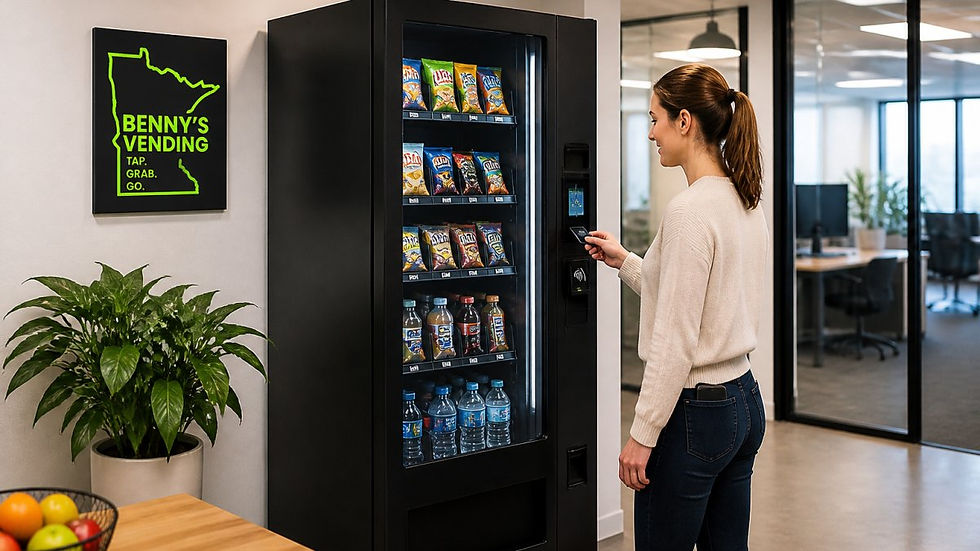
A smart vending machine is an unattended retail unit that identifies products, accepts card or contactless payment, and reports sales data back to an operator without anyone counting coins. Customers tap a card, open the door, and take what they want.
That grab-and-go flow is the core difference from a traditional machine.
Behind the scenes, machine telemetry feeds a dashboard. Operators see real-time inventory, plan restocking around actual sales data, and adjust product assortment without visiting the site.
Pro Tip The biggest operational win isn't the screen. It's the telemetry. A machine that tells you which SKUs sell out by Tuesday afternoon lets you stop guessing at product assortment and stock what actually moves.
Smart Vending Machine Cost: What You Actually Pay For
Smart vending machine cost breaks into two buckets: upfront hardware and installation, and ongoing software, payment, and service fees. Buyers fixate on the upfront number, but the ongoing numbers decide whether the investment works.
Most operators don't buy the machine outright.
What drives total cost of ownership:
Hardware and installation: machine purchase price, delivery, and setup. Cost scales with door count, screen size, and sensing tech, a glass-front unit with a vision system costs more than a coil machine with a card reader bolted on.
Software subscription: remote monitoring, inventory tracking, and reporting tools, usually billed per machine, per month. Price steps up with features, planogram tools, dynamic pricing, and API access sit in higher tiers.
Transaction fees: card and contactless processing on every sale, a percentage plus a fixed per-transaction fee, whether the sale is $1.50 or $8.00. On low-ticket items, the fixed component eats a disproportionate share of margin.
Maintenance: repairs, parts, and service calls, driven by uptime and technician distance. A unit 90 minutes from the nearest service hub costs more per call than one in a metro area.
Restocking labor: the person-hours and fuel to keep shelves full. Smart machines reduce visit frequency but don't eliminate it, someone still has to load product.
Connectivity: the cellular or Wi-Fi data plan that keeps telemetry and cashless payments running, small individually, but recurring and non-optional on a connected machine.
Insurance and shrinkage: coverage for the unit and contents, plus theft or spoilage. Cashless-only payment reduces cash theft but doesn't eliminate product loss.
Cost Category | Who Typically Pays | What Drives It | How It Behaves Over Time |
Hardware and installation | Operator or provider | Machine size, screen, payment hardware, sensing tech | One-time, but replacement cycles recur every several years |
Software subscription | Operator | Number of machines, features enabled | Recurring monthly, scales with fleet size |
Transaction fees | Operator | Card and contactless volume | Scales directly with sales, higher revenue means higher fees |
Connectivity | Operator | Data plan per machine | Recurring monthly, roughly flat per unit |
Maintenance | Operator or provider | Machine uptime, service distance | Lumpy, low early, rises as units age |
Restocking labor | Operator or provider | Foot traffic, sales volume | Falls per machine as telemetry improves routing |
Insurance and shrinkage | Operator | Coverage level, location risk | Recurring, roughly flat |
Two mechanics matter more than the raw numbers.
If you're hosting a machine rather than operating one, the relevant question isn't purchase price, it's whether a provider will place, stock, and service a machine at your location at no cost to you.
Pro Tip When you compare quotes, ask each vendor for the all-in monthly cost per machine, hardware amortized, software, transaction fees, connectivity, and an estimated maintenance reserve. A low sticker price with a high transaction fee can cost more over three years than a higher-priced machine with cheaper processing.
Smart Vending Machine ROI: Payback Periods and Revenue Realities
Smart vending machine ROI depends on three variables: location quality, sales volume, and operating costs. Get the location right and payback shortens; get it wrong and no touchscreen polish saves the investment. Here's the arithmetic so you can plug in your own numbers.
A vending-business financing article from Nav on starting a vending machine business notes that some industry estimates suggest cashless payment can boost sales by 30% or more. That figure comes from industry estimates rather than a controlled study, so use it as a ceiling, not a baseline.
How to Build a Break-Even Calculation
The payback period is the upfront investment divided by the monthly net contribution, monthly gross profit minus monthly recurring costs. Gross profit is revenue times your product margin, typically the difference between wholesale cost and retail price.
Here's the formula in plain terms:
Monthly revenue = average transactions per day × average ticket × selling days
Monthly gross profit = monthly revenue × product margin percentage
Monthly net contribution = monthly gross profit − software − transaction fees − connectivity − maintenance reserve
Payback period (months) = upfront investment ÷ monthly net contribution
Three Scenarios, Same Machine, Different Locations
Assume a smart machine with a $6,000 all-in upfront cost (hardware, delivery, setup), a $40 monthly software subscription, a $25 monthly connectivity plan, a $50 monthly maintenance reserve, payment processing of roughly 2.5% plus a small fixed fee per transaction, and a 45% product margin. These are illustrative, swap in your own quotes.
Scenario | Daily Transactions | Avg Ticket | Monthly Revenue | Monthly Net Contribution | Payback Period |
High-traffic breakroom | 60 | $3.00 | ~$5,400 | ~$2,100 | ~3 months |
Mid-size office | 25 | $2.75 | ~$2,000 | ~$700 | ~9 months |
Low-traffic site | 8 | $2.50 | ~$600 | ~$80 | ~75 months |
The pattern is the point: the same machine pays back in a few months at the high-traffic site and effectively never at the low-traffic one. The hardware didn't change, the location did. Validate traffic before buying hardware; it matters more than specs.
What Moves the Payback Period
Four levers shift the math most:
Average ticket. Bundling or stocking higher-margin items raises gross profit per transaction without adding a customer.
Product margin. Sourcing and assortment decisions move margin more than any technology feature.
Recurring cost load. Software, processing, and connectivity drag on net contribution, heavy fees need more volume to clear the same bar.
Upfront cost and financing. Leasing or revenue-share arrangements lower the upfront number and shorten apparent payback, but shift cost into the recurring column. Compare total cost over the full term, not the first-year figure.
Why Vendor Payback Claims Are Hard to Trust
A quoted payback period is only as good as its assumptions. If a vendor assumes 60 daily transactions and you'll realistically see 20, the payback triples. Ask any provider to show the transaction volume, margin, and recurring-cost assumptions behind their number; if they can't, treat it as marketing.
Revenue reality: a machine in a high-traffic breakroom with 200+ daily passersby will outsell one in a 30-person office by a wide margin.
Watch Out The most common mistake first-time buyers make is buying hardware before validating the location. A smart machine in a low-traffic spot still loses money, just with better data attached. Confirm traffic and dwell time first, then run the break-even math with your own numbers.
Key Takeaway Don't ask whether smart vending pays off in general. Ask what daily transaction count your location can realistically support, then divide your upfront cost by the resulting monthly net contribution. If the payback period is longer than your contract or your patience, the answer for your site is no, regardless of what the machine can do.
Smart Vending vs. Traditional Vending: Where the Money Goes
The smart vending vs. traditional vending comparison comes down to where the money goes.
Smart machines cost more to deploy but cut labor and guesswork. Remote monitoring replaces drive-bys. Real-time inventory tracking replaces clipboard counts. Cashless payment removes coin jams and theft risk.
Factor | Traditional Vending | Smart Vending |
Payment | Cash and coins | Card, contactless, tap-to-pay |
Restocking | Fixed schedule | Data-driven, on demand |
Inventory visibility | Manual counts | Real-time dashboard |
Customer experience | Press a code | Grab-and-go |
Upfront cost | Lower | Higher |
Labor per machine | Higher | Lower |
The trade-off is real. Smart vending asks for more upfront and returns it through efficiency and higher average transaction values. Traditional vending asks for less and returns it slowly through manual effort.
Smart Vending Machine Benefits Beyond the Balance Sheet
Smart vending machine benefits extend past the profit-and-loss statement. The operational gains matter as much as the revenue line.
Labor savings: remote monitoring cuts site visits needed to keep shelves stocked
Fewer stuck products: product recognition and modern dispensing reduce the classic "it ate my dollar" complaint
Consistent availability: data-driven restocking keeps popular items in stock
Better product assortment: sales data shows what people actually buy
Modern experience: contactless payment and touchscreens fit professional environments
For office managers and facilities teams, the payoff is employee satisfaction. A breakroom that always has what people want, with no wait and no cash, removes a daily friction point.
Key Takeaway The strongest case for smart vending isn't the technology. It's the reduction in labor and guesswork. If your current setup eats staff time or leaves shelves empty, the efficiency gain alone can justify the switch.
When Smart Vending Machines Are Not Worth It
The pattern behind them is sound: smart vending carries higher upfront and software costs that need volume and time to pay back.
There's also a merchandising angle. Even the touchscreen uplift is better read as a merchandising decision than a guaranteed payback. If your customers don't care about a screen or cashless payment, the premium buys you little.
The honest answer: smart vending is a tool, not a guarantee.
Conclusion: Making the Call for Your Location
The decision comes down to your location and your tolerance for upfront cost. High foot traffic, a long-term setup, and a team that values cashless convenience point toward smart vending. Thin traffic and short horizons point away from it.
If you'd rather skip the hardware math entirely, Benny's Vending offers a different path. We provide AI-powered smart stores and micro-markets with real-time inventory tracking and contactless payment, and we handle installation, maintenance, and restocking. Our zero-cost, no-contract options mean your business hosts the machine without owning the risk. Request a machine and see what fits your location.
Frequently Asked Questions
How long does it take for a smart vending machine to pay for itself?
Payback depends on machine cost, location traffic, and operating expenses. A smart vending machine ROI improves when monthly revenue is high and software, payment, and service fees stay low. Some operators target break-even within 12 to 24 months, but that timeline stretches at slower locations. Benny's Vending offers zero-cost, no-contract options that remove the upfront purchase price from your payback math entirely, so the machine can start earning from day one.
What are the disadvantages of smart vending machines?
Smart vending machines cost more upfront than traditional models, and they add ongoing software subscriptions and transaction fees. They also depend on reliable internet connectivity and power, so a network outage can temporarily stop cashless payments. Some operators find the technology hard to justify below roughly $1,500 per month in sales on a traditional machine or on contracts shorter than 18 months. Weigh these costs against the labor savings from remote monitoring and real-time inventory tracking before deciding.
Are smart vending machines better than traditional vending machines for an office?
For offices with steady foot traffic, smart vending machines often deliver a better experience because cashless payment, touchscreen browsing, and grab-and-go checkout reduce wait times and stuck-product complaints. They also give operators sales data and machine telemetry to keep popular items in stock. Traditional machines cost less upfront, so they can make sense at very low-traffic sites. The right choice comes down to your headcount, daily traffic, and whether you want data-driven restocking.
Can a 30-person office justify a smart vending machine?
A small office can work if daily purchases are consistent, but the math is tighter than at a large campus. A 30-person site might see 10 to 15 transactions per day, which may not cover the higher purchase price and software fees of a smart machine you buy outright. That is why zero-cost, no-contract placements matter for smaller locations: they shift the equipment risk to the operator and let you test demand before committing. Ask your provider for a site survey first.
Request a Machine


Comments