
Automated Refreshment Amenities for Apartment Buildings
Last Updated: October 23, 2026
Quick Summary
Automated refreshment amenities are smart coolers and vending machines that provide 24/7 access to beverages, snacks, and essentials in apartment buildings without requiring staff to operate them. According to research from Modern Amenities, smart vending in multifamily buildings can boost resident satisfaction by 20%. These systems use contactless payment, real-time inventory tracking, and automated restocking alerts to keep machines stocked and operational.
Smart vending can boost resident satisfaction by 20% according to Modern Amenities research.
Smart coolers and combination machines work best in lobbies, fitness centers, and community lounges.
Most smart coolers run on a standard 120-volt circuit and need reliable Wi-Fi or cellular connectivity.
Full-service vending partners handle installation, restocking, maintenance, and payment processing.
Set clear service-level agreements defining repair response times, restocking frequency, and data review schedules.
Table of Contents
Why Automated Refreshment Amenities Matter for Apartment Communities
How Smart Coolers and Automated Vending Work
Apartment Vending Machines: Options and Setup
Matching Equipment to Space and Power
What Setup Actually Involves
Costs, Revenue Models, and Contract Terms
Choosing the Right Fit
Smart Coolers for Apartment Communities
Multifamily Vending Services: What Property Managers Should Know
Automated Convenience Stores for Apartments: Implementation and Operations
The Launch Sequence
Who Does What After Launch
Food Safety and Compliance
Measuring Performance Against Service Levels
Measuring Success and Resident Engagement
Frequently Asked Questions
Why Automated Refreshment Amenities Matter for Apartment Communities
Residents want snacks and beverages around the clock without waiting for staff or visiting a store.
Modern apartment communities compete for residents. According to research from Modern Amenities on resident satisfaction, smart vending in multifamily buildings can boost resident satisfaction by 20%.
Smart coolers and vending machines now offer contactless payment, real-time inventory tracking, and data-driven restocking, so property managers no longer need staff to operate them.
The real benefit is reliability: no stockouts, no broken machines sitting empty for days, just refreshments whenever residents want them.
How Smart Coolers and Automated Vending Work
A resident walks up, sees what's available on a digital display, taps their phone for contactless payment, and grabs their item.

Here's how the system works:
Digital displays show available products and prices in real time
Contactless payment accepts mobile wallets, credit cards, and app-based transactions
Real-time inventory tracking monitors stock levels automatically
Automated restocking alerts notify management when items run low
The technology eliminates common frustrations: stuck products don't block access to other items, payments work reliably, and machines stay stocked because the system knows exactly what's inside.
At Benny's Vending, we handle all installation, maintenance, and restocking, monitoring inventory and fixing issues quickly to keep machines running and residents satisfied.
Apartment Vending Machines: Options and Setup
Property managers can choose from several types of apartment vending machines, each fitting different spaces.
Combination machines offer snacks and beverages in one compact unit, the lowest-commitment option and the easiest to place in a lobby or mailroom alcove.
Glass-front machines display products clearly, building trust and reducing confusion about pricing or freshness.
Smart coolers are refrigerated, self-contained units for beverages and grab-and-go food.
Smart micro-markets are smaller convenience stores offering a wider selection of snacks, beverages, and fresh food.
Matching Equipment to Space and Power
Before comparing quotes, confirm what your building can support. Most smart coolers run on a standard 120-volt circuit, while combination machines and micro-markets may need a dedicated circuit and additional outlets. Check three things:
Floor space and clearance, leave room for residents to stand back from the unit and for a service technician to open panels.
Power, confirm an available outlet and whether the circuit is shared with other equipment.
Connectivity, most smart systems need a reliable Wi-Fi or cellular connection for payment processing and inventory tracking. A weak signal in a basement mailroom is a common cause of failed transactions.
What Setup Actually Involves
A typical installation follows a predictable sequence, helping you compare vendor proposals on equal terms:
Site survey, the vendor confirms space, power, and connectivity and photographs the location.
Agreement and terms, you sign a service agreement covering equipment placement, restocking, repairs, and revenue terms (see the cost and contract discussion below).
Delivery and installation, equipment is positioned, leveled, powered, and connected; payment hardware is tested.
Initial stocking, the vendor loads a starting assortment based on your building's demographics and any resident survey data.
Launch and first review, after the first few weeks, you review sales data together and adjust the assortment.
Costs, Revenue Models, and Contract Terms
Ask every vendor to put the following in writing:
Equipment cost, whether the machine is provided at no charge under a service agreement or purchased outright. Most full-service operators place equipment at no upfront cost and earn their return through product sales.
Commission or revenue share, the percentage of gross sales paid to the property, and whether it is calculated on gross or net sales.
Service fees, any monthly technology, connectivity, or reporting fee, and whether it is flat or tied to volume.
Contract length and termination, the initial term, renewal terms, and notice period to exit.
A common pattern is no-upfront-cost placement with a commission paid to the property and a multi-year initial term. Because terms vary widely, request the full agreement before signing and compare total economics, not just the commission rate.
Watch Out Do not sign an agreement that leaves restocking frequency, repair response time, or refund handling undefined. These are the terms residents notice first when something goes wrong.
Choosing the Right Fit
Match the equipment to the building. A 40-unit building with a single lobby is usually best served by one smart cooler or combination machine; a 300-unit community with a fitness center, clubhouse, and mailroom may justify two or three units. Ask the vendor to walk the property and recommend placements.
Smart Coolers for Apartment Communities
Smart coolers are purpose-built refrigerated units that keep beverages cold and accessible around the clock without staff.
Smart coolers work best in high-traffic areas:
Building lobbies where residents pass through daily
Fitness centers where people want hydration after workouts
Community lounges where residents gather
Near mailrooms or package areas
Residents tap their phone or card, grab their drink, and the system records the transaction and updates inventory automatically, no cash required.
Pro Tip Stock a mix of options: water, energy drinks, sodas, and healthier beverages. Track which products sell fastest and adjust your assortment quarterly based on resident preferences.
Multifamily Vending Services: What Property Managers Should Know
Multifamily vending services handle everything so your team can focus on core property management.
Here's what a full-service vending partner typically manages:
Installation of equipment in agreed locations
Regular restocking on a scheduled basis
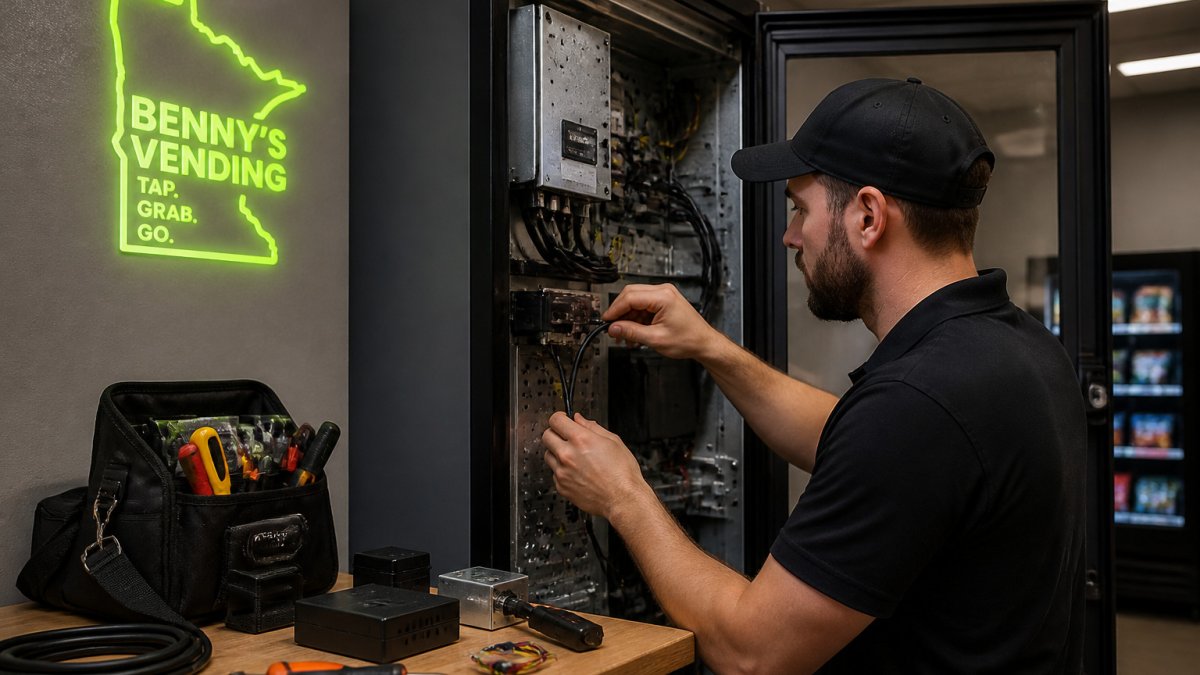
Maintenance and repairs if machines malfunction
Payment processing and transaction reconciliation
Inventory management with real-time tracking
The partnership works best when expectations are clear upfront: discuss repair response times, restocking frequency, and assortment preferences.
According to Vending Exchange on residential vending options, multifamily buildings use combination machines, glass-front machines, and smart micro-markets based on their specific needs. Each option serves different resident preferences and building layouts.
Watch Out Set clear service-level agreements with your vending partner. Define response times for repairs, restocking schedules, and how often you'll review sales data together. Misaligned expectations lead to frustration.
The best partnerships are transparent: your partner shares sales data regularly so you see which products sell, when residents buy them, and which items need adjustment.
Automated Convenience Stores for Apartments: Implementation and Operations
Implementing an automated convenience store requires planning but is manageable. Beyond the launch steps, settle post-launch responsibilities, service levels, and compliance questions before the first resident walks up.
The Launch Sequence
Step 1: Define Your Goals Decide whether you're improving resident satisfaction, generating ancillary revenue, or reducing amenity complaints.
Step 2: Choose Your Location Pick a high-traffic common area, lobbies, fitness centers, and community lounges work well.
Step 4: Plan Your Product Assortment Stock items residents actually want.
Step 5: Arrange Service and Restocking Work with your vendor to establish a restocking schedule and repair response times.
Who Does What After Launch
The most common source of friction is unclear responsibility. Put the following in writing before launch:
Restocking, the vendor monitors inventory remotely and restocks on a schedule driven by sales velocity, not a fixed calendar. Ask for the target restock frequency and the trigger that prompts an extra visit.
Cleaning, the vendor cleans equipment interiors and exteriors on each restock visit; your team handles the surrounding floor and trash.
Repairs, the vendor owns equipment repair. Ask for a response-time commitment for outages and a target time to restore service.
Refunds and failed transactions, the vendor should provide a resident-facing support channel and a refund process, with a stated turnaround.
Customer support, confirm whether residents call the vendor directly or route issues through your office.
A practical benchmark is a restock visit at least weekly for high-traffic locations, with remote monitoring catching stockouts between visits. For repairs, ask for same-day or next-business-day response on payment and cooling failures, the issues residents report most.
Food Safety and Compliance
Automated retail that includes refrigerated or fresh food raises questions worth settling early:
Temperature control, refrigerated units should hold product at safe temperatures, and the vendor should monitor temperature remotely and log it. Ask how they handle a temperature excursion.
Allergen and ingredient labeling, packaged foods carry required labeling; for any unpackaged or fresh items, confirm how allergen information is displayed.
Accessibility, confirm that payment interfaces and product reach are usable by residents with limited mobility, and that the unit does not block an accessible path of travel.
Permits and local requirements, vending and unattended retail can fall under state and local rules for food service, signage, and sales tax. Ask the vendor which permits they hold and which, if any, the property must obtain.
Payment security, confirm that card and mobile payments run through a PCI-compliant processor and that the vendor does not store resident payment data on the machine.
Watch Out Ask the vendor for their certificate of insurance and confirm the agreement assigns responsibility for food-safety compliance and any required permits. Ambiguity here becomes the property's problem later.
Measuring Performance Against Service Levels
Operations run smoothly when performance is reviewed on a schedule. Set a monthly review with the vendor and track:
Stockout rate, the share of visits where a popular item is unavailable.
Uptime, the percentage of time equipment is available and accepting payment.
Restock-to-sales ratio, whether restocking keeps pace with demand.
Resident complaints, volume and resolution time.
When these metrics are reviewed together, adjustments to assortment, restock frequency, and equipment placement become obvious. The goal is a program that runs itself, with your team reviewing data rather than managing machines.
Measuring Success and Resident Engagement
Track performance to see if your automated refreshment amenities are working.
Key metrics to monitor:
Daily transactions show how often residents use the equipment
Revenue per machine indicates whether the program generates income
Stockout frequency reveals if restocking happens often enough
Payment method mix shows resident preferences for contactless versus cash
Resident satisfaction feedback tells you if residents value the amenity
Key Takeaway Review performance data monthly. Look for trends in which products sell best, when residents buy them, and whether satisfaction is improving. Use this data to refine your program.
Sales data reveals resident behavior. If energy drinks outsell sodas, stock more energy drinks. If certain times see higher traffic, ensure restocking happens before peak hours. If residents complain about stockouts, adjust your restocking schedule.
The convenience, cashless payment, and product variety drive higher usage rates. This engagement improves resident satisfaction scores.
Benny's Vending provides real-time sales data and inventory tracking so you can see exactly how your program performs.
Apartment residents expect modern amenities. Automated refreshment amenities deliver convenience while reducing operational burden on your team.
The right partner handles installation, restocking, maintenance, and data reporting.
Request a Machine from Benny's Vending and discover how automated refreshment amenities can improve resident satisfaction while simplifying your operations.
Frequently Asked Questions
What are the main benefits of automated refreshment amenities for apartment buildings?
Automated refreshment amenities provide residents with 24/7 access to snacks, beverages, and essentials without requiring staff operation. They improve resident satisfaction by eliminating wait times and ensuring consistent product availability. Property managers benefit from reduced labor costs and real-time inventory data that shows which products residents actually want, enabling smarter restocking decisions.
How do smart coolers differ from traditional apartment vending machines?
Smart coolers combine refrigeration with advanced technology like contactless payment and real-time inventory tracking. Unlike traditional vending machines, they maintain precise temperature control for fresh food and beverages, offer mobile payment options, and provide property managers with sales data and stockout alerts. This technology eliminates the common frustration of stuck products or out-of-stock items.
What should property managers consider when choosing multifamily vending services?
Evaluate whether the provider handles installation, restocking, and maintenance, eliminating operational burden on your staff. Check for real-time inventory tracking, contactless payment capability, and customizable product assortment based on resident demand. Confirm service-level expectations, response times for repairs, and whether the solution offers zero-cost, no-contract options that align with your budget.
Are automated refreshment amenities worth the investment for smaller apartment communities?
Yes, even small complexes benefit from automated amenities. They reduce staff time spent managing refreshments and increase resident satisfaction without requiring significant upfront investment. Zero-cost, no-contract options can eliminate financial barriers, making them accessible to complexes of any size. The convenience factor and 24/7 availability appeal to residents regardless of building size.
Request a Machine
Add bennys-vending.com as a preferred source on Google →

Comments