
Best Office Vending Solutions for 2026: Top Picks
Table of Contents
Why 2026 Is the Tipping Point for Office Vending Solutions
Quick Comparison: Traditional Vending vs. Smart Vending vs. Micro-Markets
Smart Vending Machine Benefits for Modern Workplaces
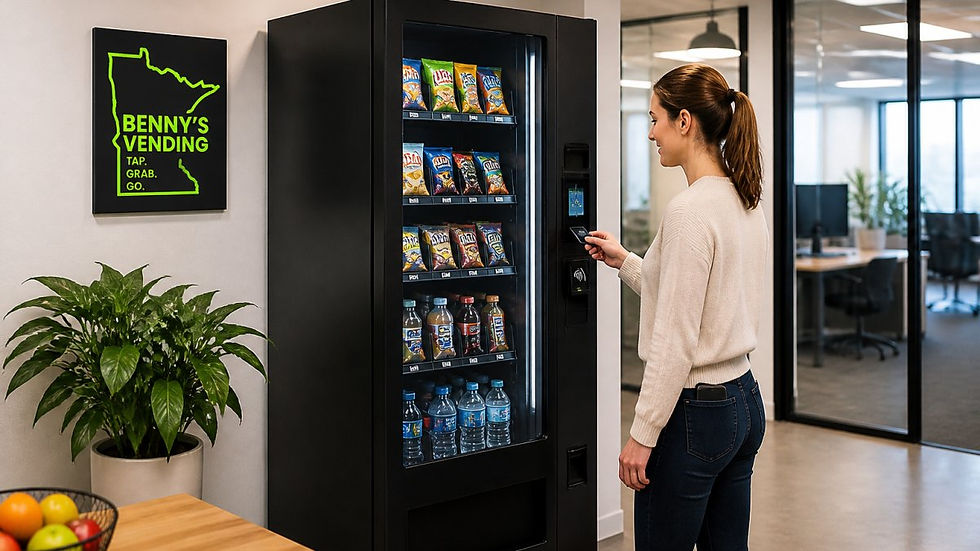
Cashless Payments and Contactless Checkout
Real-Time Inventory Tracking and Telemetry
How AI-Powered Vending Technology Changes the Game
What the AI Layer Actually Does
The Trade-Offs Nobody Puts in the Brochure
Where AI Meets the Rest of Your Office Stack
Energy and Sustainability: The Quiet Differentiator
Office Snack Supply Chain Management: Stocking What Employees Actually Buy
Costs, Contracts, and What Zero-Cost Vending Really Means
Matching the Best Office Vending Solutions to Your Workspace
Placement Beats Hardware Every Time
The Wellness Angle Most Guides Ignore
Sustainability as a Selection Criterion
Integration With Office Management Software
A Quick Decision Shortcut
Conclusion: Choosing an Office Vending Partner for 2026
Frequently Asked Questions
Last Updated: October 7, 2026
Why 2026 Is the Tipping Point for Office Vending Solutions
The global vending machine market is projected to hit $79.23 billion in 2026, growing at a 3.66% compound annual rate through 2034, according to Fortune Business Insights' 2026 vending market forecast.
Office vending solutions are the machines, micro-markets, and management systems that keep snacks and drinks available to employees without a staffed cafeteria.
This guide from Benny's Vending breaks down what's actually changing, which models fit which workplaces, and where the real costs hide.
Quick Comparison: Traditional Vending vs. Smart Vending vs. Micro-Markets
The three main options differ sharply in cost, technology, and employee experience. Here's the short version before we dig into each.
Factor | Traditional Vending | Smart Vending | Micro-Markets |
Payment | Coins, bills | Card, mobile, contactless | Card, mobile, self-checkout |
Manual, driver-dependent | Telemetry, real-time | Telemetry, real-time | |
Product range | 20-40 items | 40-80 items | 100+ items |
Footprint | Smallest | Small | Requires open floor space |
Best for | Low-traffic sites | Most offices | 100+ daily users |
Traditional units are the cheapest to place but the least flexible. Smart machines add cashless payment and telemetry. Micro-markets trade the enclosure for open shelving and far more product variety.
Key Takeaway The right choice depends on daily foot traffic, not office size. A 40-person office with steady breakroom use often outperforms a 200-person site with a scattered workforce.
Smart Vending Machine Benefits for Modern Workplaces
The clearest smart vending machine benefits show up in two places: how people pay and how operators know what to stock.

Cashless Payments and Contactless Checkout
Cashless payment is now the baseline expectation, not a bonus.
Why it matters in practice: employees rarely carry cash. A machine that only takes bills loses sales to the nearest convenience store. Contactless card readers and mobile wallets remove that friction entirely. Modernizing payment infrastructure creates a seamless experience that extends beyond automated kiosks to include the personalized touch of mobile coffee catering for special office events.
Real-Time Inventory Tracking and Telemetry
Telemetry is the technology that reports machine status remotely. It tracks what sold, what's low, and what's malfunctioning, without a driver physically checking each unit.
The payoff is restocking driven by actual data instead of a fixed route schedule. High-turnover items get refilled before they run out. Slow movers get swapped out.
How AI-Powered Vending Technology Changes the Game
AI-powered vending technology shifts the machine from passive dispenser to active inventory manager. Modern units combine AI product recommendations, real-time inventory tracking, and remote diagnostics to cut downtime, according to Modern Amenities' 2026 smart vending feature overview.
The most profitable investment areas in 2026, per VendSoft's 2026 vending machine analysis, are cashless payment, telemetry, and dynamic pricing.
What the AI Layer Actually Does
Strip away the marketing and most smart vending stacks do four jobs:
Demand forecasting. The system looks at day-of-week and time-of-day sales patterns and predicts how many units of each SKU to load on the next route. A Tuesday-afternoon office and a Saturday-shift manufacturing floor produce very different forecasts from the same machine model.
Dynamic planogram adjustment. Slow movers get flagged for replacement; fast movers get more facings. This is the mechanism behind the "let data lead" advice in the stocking section below.
Remote diagnostics. Error codes, temperature drift, and coin/bill jam events get pushed to the operator before an employee ever reports a problem.
The Trade-Offs Nobody Puts in the Brochure
High-tech machines are more complex to maintain than mechanical units. That's a service-provider question, not a hardware question.
Three practical trade-offs to weigh before you commit:
Connectivity dependency. A telemetry-driven machine with no reliable Wi-Fi or cellular signal falls back to manual restocking, you lose the entire advantage. Confirm the signal at the exact install location, not just the building.
Firmware and platform lock-in. Some operators run proprietary management platforms. If you ever want to switch providers, ask upfront whether the machine's data and planogram settings are exportable.
Service radius. Remote diagnostics only help if a technician can actually reach you. Ask how far the nearest service tech is and what the typical response window looks like for your ZIP code.
Pro Tip Ask any vending partner for a 30-day sample of their telemetry dashboard before signing. If they can't show you live sales-by-SKU data, the "AI" is marketing, not infrastructure.
Where AI Meets the Rest of Your Office Stack
This is the angle most 2026 guides skip entirely. Smart machines generate a continuous stream of usage data, what sold, when, at what price.
The catch: integration requires the vending operator to expose an API or scheduled data export. Not every operator does. If software integration is on your 2026 roadmap, make it a screening question during vendor selection, not an afterthought.
Energy and Sustainability: The Quiet Differentiator
AI-driven restocking isn't only a margin play. Fewer emergency trips means less fuel burned and less spoilage from overstocked perishables. When you're comparing vendors, ask two questions competitors' guides never raise:
Does the machine carry an ENERGY STAR rating, or at minimum use LED lighting and an energy-efficient compressor?
Does the operator publish a route-density or emissions-reduction figure?
Corporate procurement teams increasingly weight these factors in vendor scorecards. A vending partner who can speak to them has a real edge over one who can't.
Office Snack Supply Chain Management: Stocking What Employees Actually Buy
Office snack supply chain management is the practice of matching what you stock to what your specific workforce purchases. It fails when decisions are based on guesswork instead of sales data.
A common mistake is stocking a "healthy" assortment based on what management thinks employees should want. Sales data usually tells a different story. The fix is to let real purchase patterns lead:
Track which items sell out first, then increase those slots
Test new products in small quantities before committing shelf space
Rotate slow movers out on a fixed schedule
Keep one or two healthy options visible, but don't over-index on them
Watch Out Overhauling an entire planogram at once destroys your baseline data. Change a few slots at a time so you can tell what actually moved the needle.
Costs, Contracts, and What Zero-Cost Vending Really Means
Zero-cost vending means the operator covers the machine, installation, and restocking, then earns revenue from product sales. The host site pays nothing upfront.
That model works because vending is a volume business.
What to verify before signing anything:
Contract length. Some agreements lock you in for years; others run month to month.
Hidden fees. Ask directly whether there are service charges, minimum sales requirements, or removal fees.
Restocking responsibility. Confirm who handles inventory, maintenance, and repairs.
Exit terms. Know what happens if you want the machine removed.
Benny's Vending offers zero-cost and no-contract options, which removes the biggest objection most offices raise: being stuck in a long agreement with a machine nobody uses.
Matching the Best Office Vending Solutions to Your Workspace
The best office vending solutions for 2026 fit three variables: daily foot traffic, available space, and how much control you want over operations. Get those right and the machine pays for itself; get them wrong and you've bought a very expensive coat rack.
Workplace | Recommended Setup | Why |
Small office (under 50 staff) | Smart vending machine | Low footprint, cashless, no staff time needed |
Smart micro-market | Handles shift changes, reduces off-site downtime | |
Corporate campus | Micro-market plus smart machines | High volume, wide product range |
Apartment complex | Smart vending, 24/7 access | No front-desk staffing required |
Placement Beats Hardware Every Time
A mid-tier smart machine in a high-traffic breakroom will outperform a premium micro-market tucked in a hallway nobody walks down. Before you pick a model, walk your space and answer three questions:
Where do people already pause? The breakroom, the elevator lobby, and the path between the parking garage and the desks are the three highest-converting spots in most offices.
Is there power and a clear path for restocking? A machine that requires a driver to navigate two locked doors and a stairwell will get restocked less often, and it will show in your sales data.
What's the sight line from the main entrance? Visible machines get used; hidden ones don't.
The Wellness Angle Most Guides Ignore
Employee wellness and dietary compliance is the biggest gap in every competing 2026 guide. The old playbook was to stock a "healthy" row and hope. The 2026 approach is to let telemetry tell you which better-for-you items actually sell, then stock to that demand instead of removing the snack aisle entirely.
A workable framework:
Allergen-aware stocking. Keep top-8 allergen items (peanut, tree nut, dairy, soy, wheat, egg, fish, shellfish) in clearly labeled slots. Cross-contamination risk is low in sealed vending, but labeling still matters for employee trust.
Dietary variety without SKU bloat. A vegan, a keto, and a gluten-free option in the same machine covers most modern office populations without doubling your planogram.
Wellness-program tie-ins. If your HR team runs a step challenge or nutrition incentive, vending data can show whether better-for-you SKUs are actually moving, a real participation metric, not a survey.
Key Takeaway Stock to what your workforce buys, not what management thinks they should buy. Telemetry makes that possible; guessing does not.
Sustainability as a Selection Criterion
Sustainability is the second gap competitors miss. Corporate procurement teams increasingly weight energy efficiency and waste reduction in vendor scorecards, and vending is now part of that conversation. Two concrete levers:
Machine efficiency. Look for ENERGY STAR-rated units or, at minimum, LED lighting and high-efficiency compressors. Older mechanical units can draw meaningfully more power per transaction.
Route density and spoilage. AI-driven restocking means fewer emergency trips and less expired perishable inventory. Ask operators how they measure this, the ones who can answer are the ones actually doing it.
Integration With Office Management Software
The third gap: no competing guide explains how vending data plugs into broader facility or HR platforms. Smart machines can feed usage data into facilities dashboards, so breakroom restocking becomes part of your normal operations reporting instead of a separate chore.
Before you sign, ask whether the operator exposes an API or scheduled data export. If integration is on your 2026 roadmap, this is a screening question, not a nice-to-have.
A Quick Decision Shortcut
If you only remember one thing from this section: match the setup to daily foot traffic, not office headcount. A 40-person office with steady breakroom use often outperforms a 200-person site with a scattered, remote-heavy workforce. Measure actual daily users for a week before you commit to a model.
Conclusion: Choosing an Office Vending Partner for 2026
The hard part isn't picking a machine. It's finding a partner who shows up, keeps it stocked, and fixes problems before employees notice them.
Benny's Vending handles installation, maintenance, and restocking with AI-powered smart stores, real-time inventory tracking, and contactless payment, all on a zero-cost, no-contract basis. Get started with Benny's Vending and give your team a breakroom that actually works.
Frequently Asked Questions
What features should I look for in a modern office vending solution?
Prioritize cashless payment options like tap-to-pay and mobile wallets, real-time inventory tracking so restocking happens before items run out, and remote diagnostics that flag issues before they cause downtime. A vending management system with telemetry gives you visibility into what sells and what sits. Also check whether the provider handles installation, maintenance, and restocking, since that determines how much staff time your office vending solutions demand week to week.
How does AI-powered inventory tracking improve office vending?
AI-powered vending technology analyzes purchase patterns to predict which products need restocking and when, rather than relying on fixed schedules. This reduces both empty slots and expired inventory. Real-time analytics also show which snacks and drinks actually sell at your location, so you stop guessing. Providers using this approach report fewer stockouts and less downtime because remote diagnostics catch mechanical issues before employees notice them.
Are smart vending machines more profitable for businesses?
Smart vending machines tend to outperform traditional units because cashless payment removes friction at checkout and telemetry keeps popular items in stock. For offices, the bigger gain is employee satisfaction: fewer stuck products and consistent availability matter more than the machine's internal mechanics.
What is replacing traditional vending machines in professional environments?
Micro-markets are the main shift. Workplace refreshment is moving toward unstaffed, open-concept retail spaces where employees grab items and pay at a self-checkout kiosk. Micro-markets typically offer fresher food and a wider selection, which traditional vending hardware cannot match.
Request a Machine


Comments