
How to Improve Employee Breakroom Satisfaction
Table of Contents
Start With Employee Feedback: The Foundation of Breakroom Satisfaction
Design Surveys That Get Real Answers
Your Employee Breakroom Essentials Checklist
Seating and Ergonomic Furniture
Refreshment Station and Coffee Setup
Benefits of Smart Vending Machines for Breakroom Satisfaction
Cost-Effective Breakroom Upgrades That Deliver Results
A Prioritization Framework for Tight Budgets
DIY Improvements Under $500
DIY Improvements Under $1,500
What to Skip
Measuring Whether the Spend Worked
Designing for Comfort, Accessibility, and Inclusivity
Hybrid Work Break Room Strategies and Hygiene Protocols
Rethinking Capacity for a 2-3 Day Office
Smart Vending as a Hybrid Infrastructure Play
Designing for the Days People Are Actually There
Post-Pandemic Hygiene Protocols That Stick
The Hybrid Hygiene Trap
Frequently Asked Questions
Last Updated: October 2, 2026
Start With Employee Feedback: The Foundation of Breakroom Satisfaction
Only 20% of employees worldwide were engaged in 2025, according to Gallup's State of the Global Workplace report. That disengagement costs businesses $10 trillion in lost productivity every year. If you want to improve employee breakroom satisfaction, stop guessing what your team wants and start asking them directly.
Design Surveys That Get Real Answers
Employee breakroom satisfaction is the measurable level of contentment employees feel with the space, amenities, and food options available during their breaks. It's not about fancy furniture alone. It's about whether the room actually serves the people who use it.
Likert scales: "How satisfied are you with snack variety?" (1-5)
Multiple choice: "What time do you usually take breaks?"
Open-ended: "What's missing from our breakroom?"
Pro Tip Run surveys quarterly, not annually. Tastes and schedules shift fast, especially with hybrid teams. A short 5-question pulse check beats a 30-question monster nobody finishes.
Your Employee Breakroom Essentials Checklist
A breakroom that works covers five basics: comfortable seating, reliable refreshments, good lighting, quiet space, and room to socialize. Miss any one of these and the room feels incomplete.
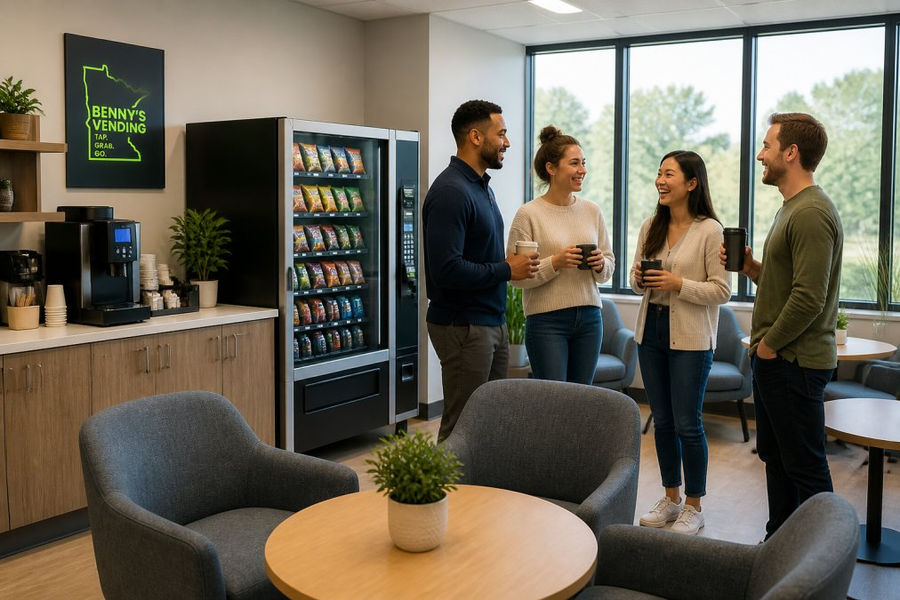
Use this checklist to audit your space:
Seating for at least 60% of your peak break crowd
Coffee and tea station with easy cleanup
Snack and beverage options for different diets
Natural light or warm lamps (not harsh fluorescents)
A quiet corner for decompression
Waste and recycling bins within reach
Wipeable surfaces for quick cleaning
Seating and Ergonomic Furniture
Ergonomic furniture isn't just for desks. Breakroom chairs should support backs and arms, especially for employees who stand all day. A manufacturing worker on a 15-minute break needs a chair that actually helps them rest.
Refreshment Station and Coffee Setup
A coffee station is the heart of most breakrooms. Keep it simple: quality beans, hot water, creamer, and a clean counter. Add cold drinks nearby so people don't have to walk across the room.
Benefits of Smart Vending Machines for Breakroom Satisfaction
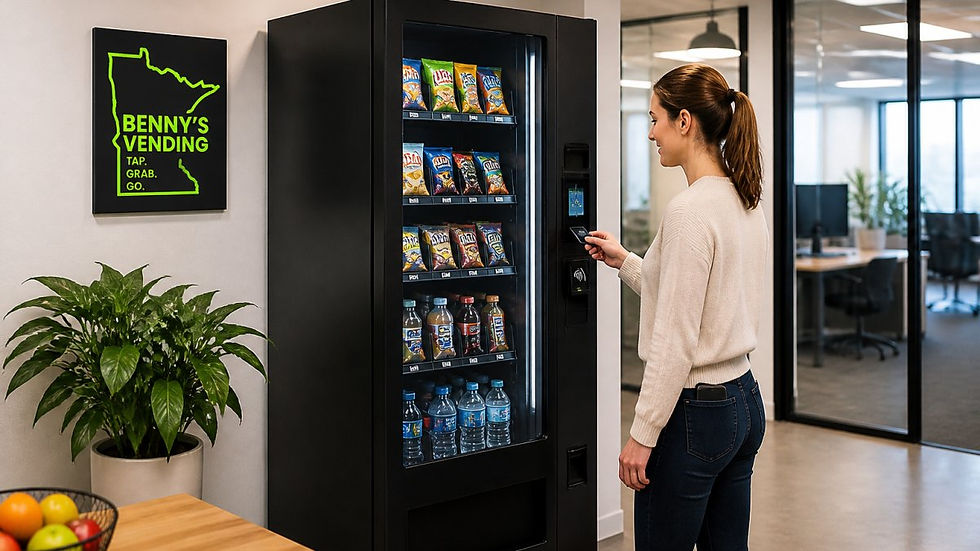
Smart vending machines improve breakroom satisfaction by eliminating the two biggest frustrations: stuck products and empty slots. They use real-time inventory tracking to restock before items run out, and contactless payment so nobody digs for cash.
The benefits stack up quickly:
No wait times: Tap, grab, and go in under 10 seconds
Consistent availability: AI tracks what sells and restocks automatically
Modern experience: Digital displays and card readers feel current
Less admin work: No more counting coins or chasing refunds
Data you can use: See what employees actually buy
Feature | Traditional Vending | Smart Vending |
Payment | Cash or coins | Contactless card, phone |
Restocking | Manual, reactive | AI-tracked, proactive |
Product data | None | Real-time sales reports |
Stuck items | Common | Rare |
Setup cost | Often upfront | Zero cost options |
Cost-Effective Breakroom Upgrades That Deliver Results
Cost-effective breakroom upgrades focus on high-impact changes that don't drain the budget. Research from PMC's study on workplace environment and task performance shows the physical environment directly affects how well employees perform, mediated by their commitment to the job. The practical takeaway: spend where employees actually notice, and skip the rest.
A Prioritization Framework for Tight Budgets
Use this three-tier filter before spending a dollar:
Tier 1, Daily friction removers (do first). Anything that touches every break: coffee quality, snack variety, clean counters, working microwave, reliable refrigeration. These have the highest satisfaction-per-dollar ratio.
Tier 2, Comfort multipliers (do second). Seating cushions, warmer lighting, a second seating zone. These lift satisfaction once the basics work.
Tier 3, Delight features (do last). Plants, art, branded mugs, a snack request board. Nice, but they don't move the needle if Tier 1 is broken.
A common pattern among small businesses is to invert this order, buying plants before fixing the coffee, and then wondering why satisfaction scores stay flat.
DIY Improvements Under $500
Small changes add up. Here's what $500 can cover, with rough pricing typical of national retailers:
$80: Two large potted plants for natural elements
$120: Warm floor and table lamps to soften lighting
$60: A whiteboard for snack requests and team notes
$100: Cushioned seat pads for hard chairs
$140: A basic coffee grinder and better beans
DIY Improvements Under $1,500
If you have a bit more room, this tier targets the upgrades employees rate highest in feedback surveys:
$300-$500: A compact countertop water dispenser with hot and cold options
$200-$400: Two to three task lamps plus LED bulb swaps to replace harsh overhead fluorescents
$150-$250: A small area rug and one soft armchair to define a quiet corner
$100-$200: A labeled snack organizer with clear bins for dietary categories (gluten-free, nut-free, low-sugar)
$150-$300: A white-noise machine or small Bluetooth speaker for the quiet zone
What to Skip
Matching furniture sets. Mismatched, comfortable pieces read as "lived-in" rather than "cheap."
Large decorative installations. Murals and accent walls cost thousands and rarely show up in satisfaction feedback.
Single-purpose appliances. A panini press used twice a month is worse than a second microwave used ten times a day.
Measuring Whether the Spend Worked
Tie every upgrade to a metric before you buy it. If you're adding snack variety, track vending or pantry consumption by category for 30 days before and after. If you're adding a quiet zone, add one survey question, "Can you find a quiet place to decompress during breaks?", and compare quarter over quarter. Upgrades without a before-and-after measure are just guesses with receipts.
Watch Out Physical upgrades alone won't fix low morale. Research from Walden University's study on managerial engagement strategies shows supervisor interaction matters just as much as amenities. If managers never step into the breakroom, no amount of new furniture will help.
Designing for Comfort, Accessibility, and Inclusivity
Accessible design makes the breakroom work for everyone, not just the average employee. That means clear paths for wheelchairs, tables at multiple heights, and labels in large print.
Most guides skip this. Don't.
Leave 36 inches of clear path between tables
Offer seating at 18, 24, and 30 inches
Use high-contrast labels on snack bins
Keep one table low enough for wheelchair users
Add a quiet, low-light corner for employees who need sensory breaks
Hybrid Work Break Room Strategies and Hygiene Protocols
Hybrid schedules change how breakrooms get used. Instead of steady daily traffic, you get bursts on in-office days, often Tuesday through Thursday, and near-empty rooms the rest of the week. Most breakroom guides still assume a five-day, fully-occupied office. That assumption is now wrong for a large share of workplaces, and it breaks everything from snack stocking to cleaning schedules.
Rethinking Capacity for a 2-3 Day Office
If your team is in the office three days a week, you don't need seating for the full headcount. A common pattern is to size seating for 50-60% of total headcount, then add flexible options, stackable stools, a standing counter, or a foldable table, for peak days. This cuts furniture cost and keeps the room from feeling cavernous on quiet days.
Stock coffee and creamer for peak-day volume, not average-day volume
Schedule restocking the afternoon before in-office days, not the morning of
Expect vending and pantry consumption to spike 2-3x on anchor days
Smart Vending as a Hybrid Infrastructure Play
Smart vending fits hybrid schedules better than traditional machines because it tracks demand in real time. When Tuesday traffic doubles, the machine's sales data shows it, and restocking adjusts. Traditional vending can't do this; it either runs empty on peak days or sits overstocked on quiet ones.
Designing for the Days People Are Actually There
Anchor-day energy is different from daily-grind energy. People come in to collaborate, so the breakroom often becomes an informal meeting space. Plan for it:
One table sized for four to six people, not just two-tops
Power outlets near seating for laptops and phones
A visible "no meetings" quiet zone so the room serves both social and decompression needs
A whiteboard or digital display for team notes, birthday shout-outs, or snack requests
Post-Pandemic Hygiene Protocols That Stick
Hygiene expectations shifted after 2020 and haven't fully reverted. Employees notice shared surfaces more than they used to, and a visibly dirty breakroom undermines every other upgrade you make. Keep these habits:
Wipe shared counters twice daily on in-office days
Stock hand sanitizer at every station, including the coffee bar
Use touchless dispensers for soap, paper towels, and sanitizer where possible
Deep clean coffee equipment weekly, including the grinder, carafe, and drip tray
Post a visible cleaning schedule with initials and times so accountability is obvious
Replace sponges and dish towels on a fixed weekly cadence, not "when they look bad"
The Hybrid Hygiene Trap
Quiet days create a hidden problem: shared food and coffee supplies sit unused, then get consumed on peak days when nobody's sure how long they've been open. Label opened items with dates. Toss dairy creamers after seven days. Rotate perishable snacks weekly. A simple date-labeling habit prevents the most common hybrid breakroom complaint, "I don't trust what's in there."
Pro Tip Run a two-week traffic count before you redesign for hybrid. Tally how many people use the breakroom each day, then match seating, stocking, and cleaning to the actual peak, not to the org chart headcount.
Frequently Asked Questions
What does employee satisfaction mean?
Employee satisfaction measures how content and fulfilled employees feel with their work environment, culture, and amenities. It directly affects morale, productivity, and retention. Gallup's 2026 report found only 20% of employees worldwide were engaged in 2025, showing a widespread need for improvement. Boosting breakroom satisfaction is one practical way to raise overall satisfaction because it addresses daily comfort and social connection.
What are the most common employee complaints about breakrooms?
Common complaints include limited snack variety, stale coffee, uncomfortable seating, and lack of cleanliness. Employees also dislike waiting for vending machines or finding items out of stock. Switching to smart vending machines with real-time inventory tracking ensures popular items stay available, while ergonomic furniture and regular hygiene protocols address other pain points. Surveys with 70-80% closed-ended questions help pinpoint specific issues.
How does breakroom design impact employee productivity?
A well-designed breakroom supports stress reduction and recharging, which improves focus and productivity. Research from PMC (2022) shows workplace environment significantly affects task performance through employee commitment. Features like natural lighting, ergonomic furniture, and quiet zones help employees return to work refreshed. For every $1 invested in engagement, productivity gains follow; disengagement costs $10 trillion globally, per Gallup.
How can smart vending solutions improve breakroom satisfaction?
Smart vending machines offer convenience, variety, and reliability. They use AI to track inventory, so popular snacks and drinks are always stocked. Contactless payment speeds up service and reduces wait times. These machines can also suggest healthier options based on past purchases, helping employees discover new favorites. For offices in the Twin Cities area, Benny's Vending provides zero-cost, no-contract smart vending with real-time restocking.
Improving breakroom satisfaction doesn't require a big budget or a full remodel. It requires listening to employees, fixing the small frustrations, and using tools that keep the room stocked and clean. Benny's Vending makes that easy with AI-powered smart stores, real-time inventory tracking, contactless payment, and zero-cost, no-contract options. Request a machine and give your team a breakroom they'll actually use.
Request a Machine


Comments