
Choosing a Vending Services Company for Your Workplace
Quick Summary
A vending services company selects, installs, stocks, maintains and repairs machines in your workplace, and collects the revenue they generate. Choose one by comparing its service coverage and response times, restocking approach, pricing model and contract terms, and by first assessing your headcount, break patterns and location.
Ask each provider how quickly a technician responds when a machine breaks down.
Check whether restocking follows real sales data or a fixed schedule.
Compare the commission, no-cost placement and purchase or lease models.
Read the contract's renewal notice window and any minimum sales requirements.
Count daily users and shift patterns before requesting quotes.
Is a smart vending setup right for your office?
Benny's Vending installs, stocks, and maintains AI-powered smart stores that track inventory in real time.
Table of Contents
What a Vending Services Company Actually Does
Choosing a vending services company for your workplace starts with knowing what that company is responsible for. A provider typically selects and installs machines, stocks them with products, tracks what sells, handles repairs, and collects payments or revenue. Some providers also manage pricing and product mix based on what employees actually buy.
Service matters as much as the equipment. A machine that sits empty or stays broken creates frustration. Ask any provider how often they restock, how quickly they respond to a breakdown, and who handles the product selection.
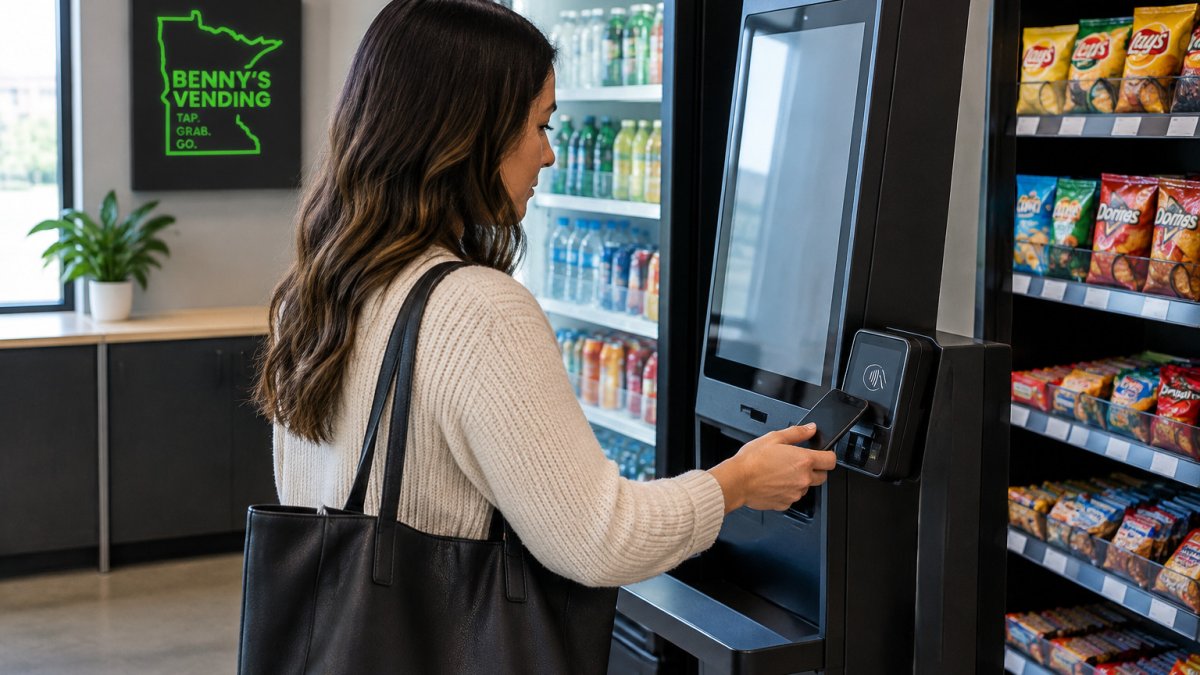
At Benny's Vending, we handle installation, maintenance, and restocking for the machines we place. Our smart stores use real-time inventory tracking, so restocking is driven by what is actually selling rather than a fixed schedule.
Service Types: Snacks, Drinks, Coffee, Water and Micro Markets
Workplace refreshment comes in several formats, and each serves a different need. Traditional snack and beverage machines remain the most common choice for small and mid-sized offices. They are simple to run and cost little floor space.

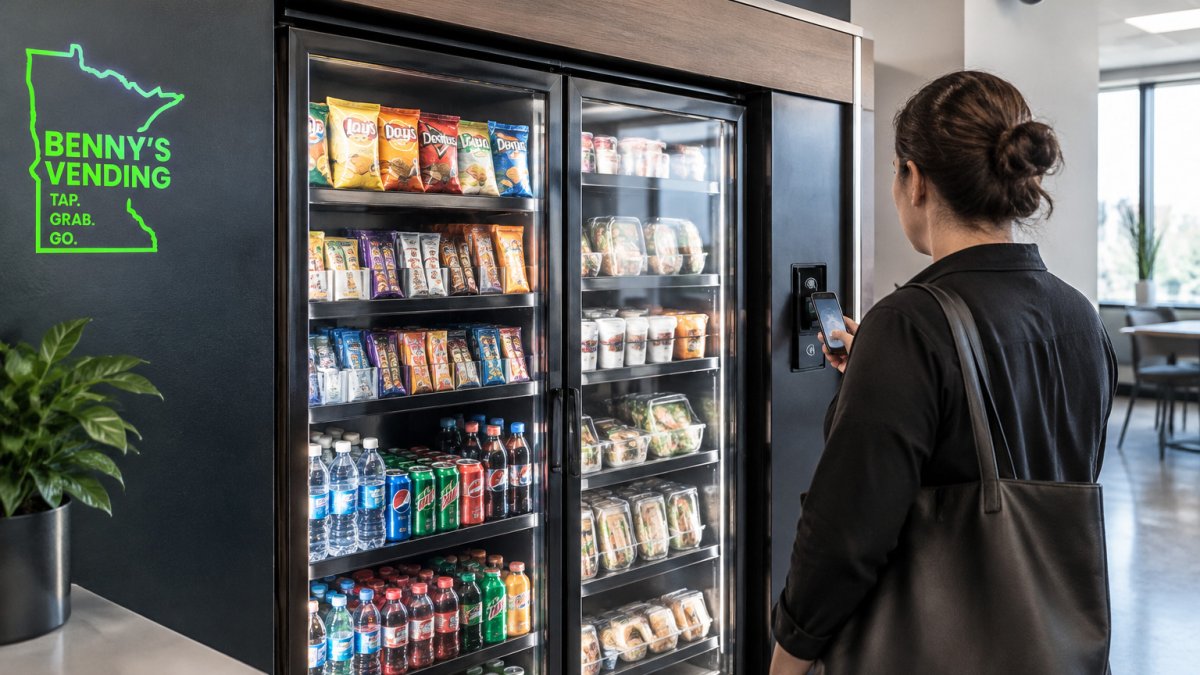
Coffee and water service suit offices where employees want hot drinks or filtered water throughout the day. Micro markets go a step further. They offer a self-serve area with a wider range of fresh and packaged food, often with cashless checkout. Smart coolers fall in between, combining refrigerated drinks and snacks in a compact cabinet.
Before you choose a format, consider how many employees you have and when they take breaks. A 30-person office with a steady lunch rush may need a different setup than a manufacturing floor where workers need quick access during short shifts.
Side-by-Side Criteria for Comparing Providers
Comparing vending providers is easier when you use the same checklist for each one. Start with the criteria that affect daily experience, then move to contract details. Ask every provider for written answers so you can compare them directly.
Service Coverage and Response Times
Ask whether the provider serves your exact location and how quickly a technician can arrive when a machine fails. Response time matters most for machines in heavily used areas. Get the provider's standard response window in writing, along with what counts as an emergency.
Inventory Management and Restocking Frequency
Ask how the provider decides what to stock and how often it restocks. Providers with inventory tracking can adjust product mix based on sales data. Providers without it often restock on a fixed schedule, which can leave popular items gone and slow sellers piling up.
Pricing Models, Contract Terms and Hidden Fees
Vending pricing is not a single number. It is a bundle of revenue, equipment, and service terms, and the bundle is where most buyer surprises live. The three common models work like this:
Commission model. The provider pays you a percentage of gross sales. You get a check, but the provider controls product mix and pricing, and commission rates may come with minimum sales thresholds.
No-cost placement model. The provider places and services the machine at no charge and keeps all sales revenue. This is the most common arrangement for smaller offices. The tradeoff is that you have little say over product selection or pricing.
Purchase or lease model. You buy or lease the equipment and either service it yourself or pay a management fee. This gives you control over product mix and margins but shifts maintenance and restocking responsibility to you or to a fee-based contract.
Ask every provider which model they are proposing and why. A provider that only offers one model may not be the best fit for your headcount or your goals.
Contract Terms to Read Line by Line
Vending agreement terms vary by provider. The length matters because early termination may trigger a buyout. Before signing, confirm these terms in writing:
Term and renewal. Does the contract auto-renew, and how much notice is required to cancel? Check the notice window carefully, since missing it may lock you in for another term.
Minimum sales requirements. Some contracts set a monthly sales floor. If your office falls short, the provider may impose a fee or remove the machine. Ask what happens in a slow month.
Equipment ownership. Confirm whether the machine is leased, placed at no cost, or sold. Ownership affects who pays for repairs, replacement, and removal.
Price change clauses. Providers often reserve the right to adjust product prices. Ask for the notice period and any cap on increases.
Exclusivity. Some contracts bar you from adding a competing machine or a micro market during the term. If you plan to expand, negotiate that out.
Fees That Do Not Appear in the Headline
Setup, delivery, and installation may or may not be billed. Ask each provider which fees apply. Ask for a full fee schedule, not just a per-item price list.
Ask in writing whether any monthly charges apply after installation and what triggers them.
You can compare no-cost service options and their terms in our zero cost vending machine service options guide. It covers what no-cost programs usually include and what to watch for in the fine print.
The three common pricing models differ in who controls product mix and who handles maintenance. For a breakdown of transaction, software, and connectivity charges that can surface after signing, see hidden fees explained.
Model | Who keeps the sales revenue | Key tradeoff |
Commission | Provider pays you a percentage of gross sales | Provider controls product mix and pricing |
No-cost placement | Provider keeps all sales revenue | Little say over product selection or pricing |
Purchase or lease | You keep margins after equipment costs | You take on maintenance and restocking or pay a fee |
Pros and Cons of Traditional Machines Versus Smart Coolers
Traditional vending machines are familiar, affordable to place, and easy for employees to understand. They work well for basic snacks and drinks. Their drawbacks include limited product choice, cash or card-only payment in many cases, and no visibility into what is running low. Limited choice and poor visibility make it important to weigh a vendor’s ability to meet everyday needs, much as choosing a screening vendor calls for attention to fit and reliability.
Smart coolers and micro markets can offer real-time inventory tracking and contactless payment.
To judge whether the added technology is worth the cost, compare the expected return against your employee usage. Our smart vending machine installation cost guide explains the main drivers of upfront and recurring expense, and are smart vending machines worth it walks through a cost and return comparison.
How to Assess Your Workplace's Needs Before You Call
A short needs assessment before you request quotes will make every conversation more productive and every proposal easier to compare. Use this five-factor framework and write down the answers so you can share the same facts with each provider.
1. Headcount and Daily Usage
Count the people on site on a typical day, not the total headcount on payroll. Then estimate how many will actually buy: usage varies by workplace and should be estimated from your own headcount and habits.
2. Shift Patterns and Break Timing
A single-day-shift office concentrates demand at mid-morning and lunch. A multi-shift operation spreads demand across 24 hours and may need machines in more than one area, or a provider willing to restock outside standard business hours. Note the length of breaks: short, staggered breaks favor grab-and-go snacks and cold drinks, while longer lunch windows can support fresh food and coffee service.
3. Foot Traffic and Location
Identify where people already congregate: break rooms, lobbies, near entrances, and along the path between work areas and exits. High-traffic spots get more use and justify a larger or smarter machine. Low-traffic areas may only support a small cooler. Also confirm power access and floor space; confirm the space and power each machine requires with the provider.
4. Dietary Preferences and Product Mix
Ask employees what they want before you commit to a product mix. A short survey with a few forced choices (better-for-you snacks, fresh food, coffee, energy drinks) is more useful than an open-ended question. If your team skews toward healthier options, confirm the provider can stock refrigerated fresh food and label allergens. If you have employees with dietary restrictions, ask how the provider handles allergen labeling and product rotation.
5. Budget and Decision Authority
Decide in advance whether you want a commission, no-cost placement, or purchase model, and who in your organization can sign a multi-year agreement. Knowing your budget range and your approval chain prevents wasted meetings and makes it easier to spot a proposal that does not fit.
Turning the Assessment Into a Service Model
Use the answers to narrow the format before you call:
These are starting points, not rules. The value of the assessment is that it gives every provider the same facts, so their proposals differ on service and terms rather than on assumptions about your workplace.
Booking a Machine Consultation With Benny's Vending
If you are ready to see what a modern setup would look like in your office, Benny's Vending offers consultations for workplaces across Minnesota. We will review your space and your needs, then discuss a setup that fits. You can also look at the AI-powered machines we install and stock before you schedule.
Request a machine and we will walk you through options, terms, and a clear quote tailored to your location.
Frequently Asked Questions
How do vending services work?
A vending services company typically installs machines at your site, stocks them with snacks and beverages, and handles maintenance and restocking. Most providers track sales and inventory so restocking matches demand rather than guesswork. Some operators share revenue with the host location, while others may offer no-cost placement. Ask each provider exactly who owns the machine, who stocks it, who pays for repairs and how often a route visit happens, because those answers determine how much work lands on your team.
How often should a vending machine be restocked?
Restocking frequency depends on headcount, machine type and how much product each machine moves. Smart coolers and micro markets with real-time inventory tracking let the provider restock based on actual sales data rather than a fixed schedule. When comparing providers, ask how they track inventory and what their target response time is for a low-stock or out-of-order alert.
Who is responsible for restocking and repairing vending machines?
Ask each provider which installation, restocking, maintenance and repair tasks it handles. Get the responsibilities written into the agreement, including who reports a machine fault, the expected response window and what happens if a product is stuck or a payment system fails.
Should a small office use a vending services company?
Whether a vending services company fits a small office depends on the placement options and product mix each provider offers. Ask whether the company requires a minimum number of machines or sales, whether the machine placement is free, and how quickly the team can service a single location in your area.

Comments