
Modernizing Vending for Warehouse Logistics: A Practical Guide
Quick Summary
Modernizing vending for warehouse logistics means replacing old coin-operated machines with smart, connected units that offer contactless payment and real-time stock tracking. Workers spend less time waiting or walking, and managers restock before shelves run empty. Start with a baseline, then measure stockouts, restocking visits and labor recovered.
Smart machines use sensors, contactless payment and real-time inventory data.
Place machines where workers pass during breaks, not in a distant corner.
Measure a baseline for at least four weeks before the upgrade.
Track stockout rate, sell-through rate and failed vend counts by machine.
Agree on a shared SKU list with the WMS before go-live.
Ready to modernize your breakroom?
Benny's Vending provides smart, contactless vending with real-time inventory tracking for warehouses.
Table of Contents
Why Traditional Vending Falls Short in Warehouse Operations
Warehouse breakrooms often run on machines that were installed years ago and rarely updated. Workers walk to a vending machine, find it out of stock, or watch a bag of chips get stuck behind the coil. For warehouse logistics teams, that lost time adds up across a shift.
Traditional vending machines were built for simple, one-way transactions. They rely on coins or cash, offer little visibility into stock levels, and depend on someone checking each unit on a schedule. When a machine runs empty mid-week, nobody knows until a worker complains.
For warehouse logistics teams, this creates a real operational gap. A breakroom should support workers, not slow them down. Modernizing the vending experience starts with recognizing where the old model breaks down. Closing that gap means treating convenient access to essentials as part of the broader warehouse automation solutions that keep daily operations moving.
How Smart Vending Machines for Warehouses Work
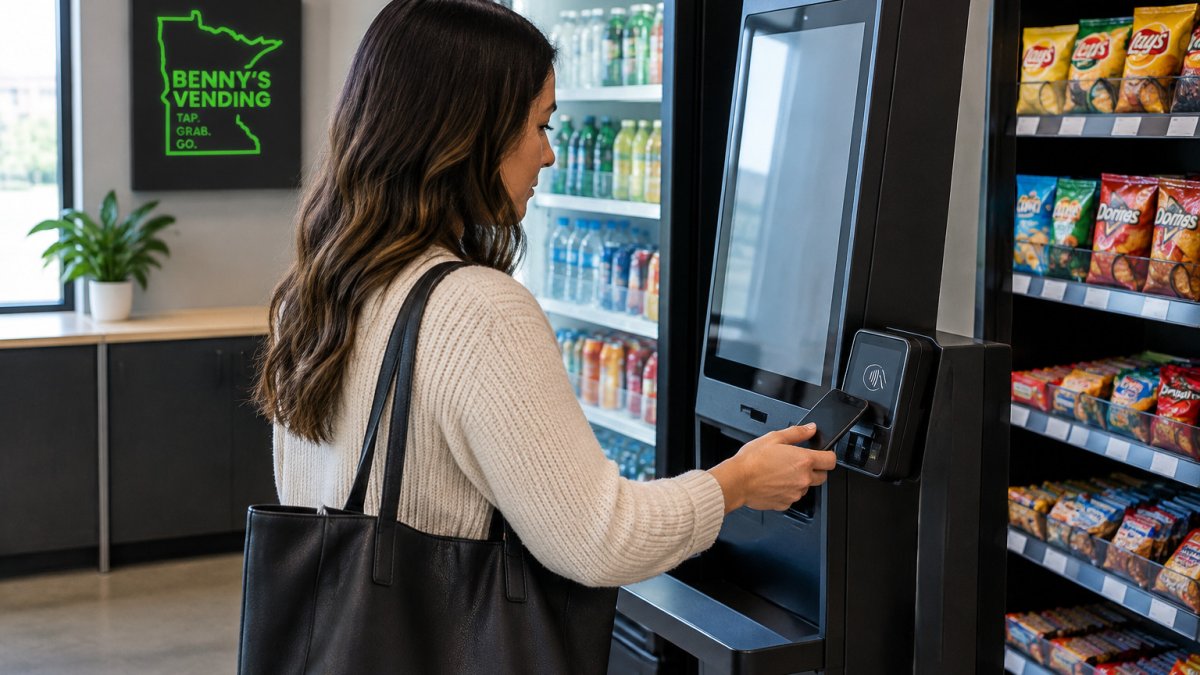
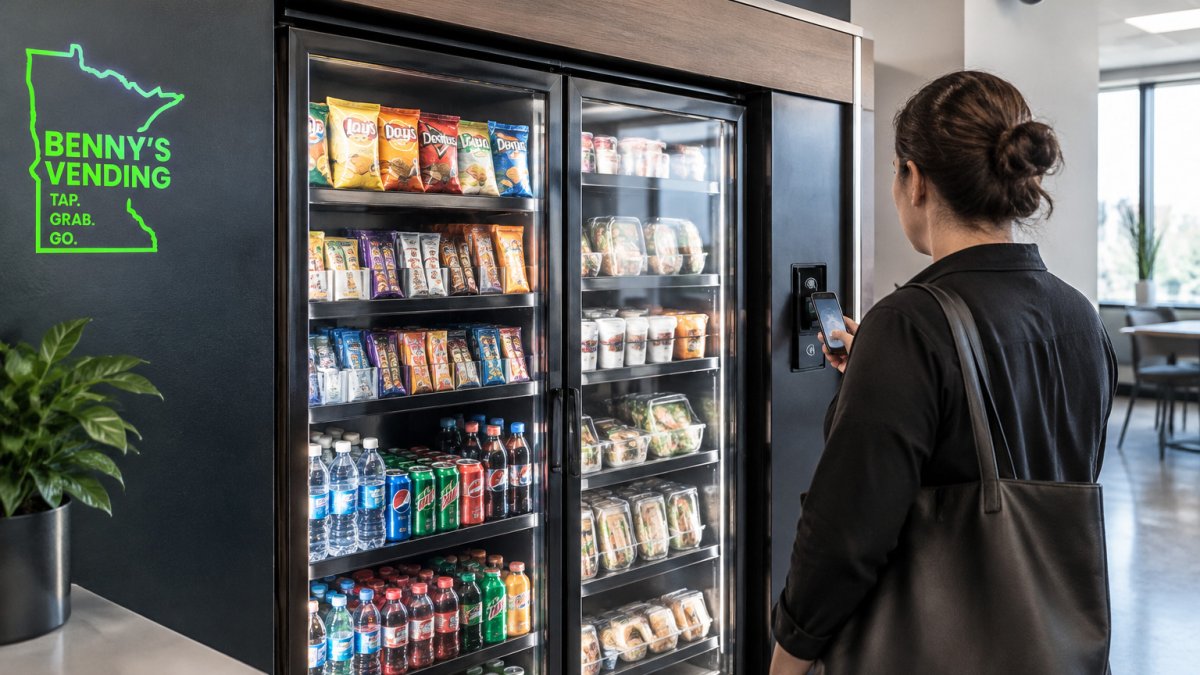
Smart vending machines use connected sensors, contactless payment, and real-time inventory data. Workers tap a card or phone, select an item, and leave. There is no coin counting and no stuck product to shake loose.
Smart vending machines for warehouses are built to handle high-traffic breaks. They track each sale and flag low stock before a shelf goes empty.
Warehouse employees using contactless payment at a smart vending machine to improve warehouse logistics efficiency
The core parts are simple:
Sensors: Track what is sold and what is left.
Contactless payment: Removes cash handling and coin jams.
Data reporting: Shows restocking needs before a shelf is empty.
Real-Time Vending Inventory Tracking and Restocking Decisions
Real-time vending inventory tracking turns each machine into a data source. Learn more about how AI inventory tracking improves service levels and cuts stockouts. Every transaction records the item, the time, the payment method, and the machine location. That record is what separates a modernized vending program from a route driver guessing which coils look low.
The mechanism matters more than the dashboard.
Connecting Vending Data to Warehouse Systems
Watch out: if the vending platform and the WMS use different item numbers, reconciliation becomes a manual job and the integration quietly stops being used. Agree on a shared SKU list before go-live.
What to Watch in the Data
A facilities or operations manager does not need every field the platform collects. A short list covers most decisions:
Stockout rate by SKU and by machine: The share of time an item is unavailable when a worker wants it.
Sell-through rate: Units sold against units stocked, which shows which products earn their shelf space.
Failed vend and jam counts: A rising jam rate points to a mechanical issue or the wrong product for the coil or locker format.
Restocking visits per machine per month: A falling number with stable stockouts means the routing is working.
Time-of-day demand: Break patterns by shift, which informs both product mix and restock timing.
Use those numbers to make two decisions: which products to keep, and when to send a technician. A slow seller that occupies a slot is a cost; a fast seller that stocks out during the busiest break is a lost transaction and a frustrated worker. Real-time tracking is what lets a manager tell the difference.
The article points to a handful of metrics that tell a manager which products to keep and when to send a technician.
Metric | What it shows | Decision it informs |
Stockout rate by SKU and machine | Share of time an item is unavailable | Restock timing and product mix |
Sell-through rate | Units sold against units stocked | Which products earn their shelf space |
Failed vend and jam counts | Mechanical or format problems | When to send a technician |
Restocking visits per machine per month | Routing efficiency | Whether restocking is working |
Time-of-day demand | Break patterns by shift | Product mix and restock timing |
Planning a Warehouse Breakroom Solution Step by Step
A warehouse breakroom solution works best when it is planned before equipment arrives. Start with headcount, shift times, and where workers actually take breaks.
Planning checklist:
Count workers per shift and note peak break times.
Map the breakroom and confirm power and network access.
Decide which product categories matter most.
Set a clear owner for restocking and service calls.
Choosing Equipment and Placement
Place machines where workers pass during breaks, not in a distant corner. Keep traffic flow clear so workers can access the machine without blocking a loading area. Choose a footprint that fits the room without crowding it.
Equipment choice should match the work. A high-traffic site needs fast payment and reliable restocking. A smaller site may only need one compact unit with clear stock reporting.
Security, Compliance and Loss Prevention
Machines in a warehouse need protection from theft and misuse. Read about practical locks, cameras and checklists that cut theft and vandalism. Locate them in a monitored area and keep access controlled during off hours. Confirm that the provider handles maintenance and that any payment data is handled according to your company's policies.
Loss prevention also depends on accurate inventory records. When stock counts match sales data, unexplained losses are easier to spot.
Measuring Performance and Return on Vending Upgrades
Most vending upgrade proposals fail on the same point: they promise convenience but never show a number. A defensible business case starts with a baseline, tracks a small set of vending-specific metrics, and converts the change into dollars the site already cares about.
Step 1: Capture a Baseline Before the Upgrade
Measure the current state for at least four weeks so a single heavy-shipment week does not skew the result. Record:
Stockout frequency: How often a worker finds the desired item unavailable, sampled by shift.
Restocking visits per month: Count every trip, including visits where nothing was needed.
Service calls per month: Jams, payment failures, and outages.
Wait and walk time: A short time study of how long a worker spends traveling to and waiting at the machine during a break.
Shrink and unexplained loss: Stock counted against stock sold, where the current setup allows a count at all.
Step 2: Track the Same Metrics After Go-Live
Use the platform's transaction and inventory data rather than manual counts. Compare like periods, same shift pattern, same season, same headcount, so the comparison holds.
Step 3: Convert the Change into Dollars
The ROI method does not need to be complicated. Build it from four lines:
Labor recovered: Multiply the reduction in wait and walk minutes per worker per shift by the number of workers and shifts, then by the loaded hourly rate. Even a few minutes per shift across a large crew produces a meaningful annual figure.
Restocking and service cost: Compare visits and service calls before and after, using the provider's per-visit or contract terms.
Shrink reduction: Value the difference between expected and actual stock once transaction records make losses visible.
Downtime avoided: Value the reduction in stockouts for items workers depend on to do their jobs, such as PPE, gloves, or scanner batteries, in terms of interrupted work rather than product price.
Add the annual savings, subtract the annual cost of the program, and divide by the program cost to get a simple return figure. Present the payback period in months alongside it, because most operations leaders approve on payback, not on a percentage.
Step 4: Set Targets and Review Quarterly
Agree on targets before launch, for example, a lower stockout rate, fewer restocking visits, and a shorter average wait. Review them quarterly against the baseline. A metric that does not move is a signal to change product mix, placement, or the replenishment model, not a reason to abandon the program.
Watch out: comparing a post-launch month against a pre-launch month that included a holiday shutdown or a peak shipping season will produce a number nobody trusts. Match the periods or extend the baseline.
Total Cost of Ownership and Vendor Evaluation
ROI only holds if the cost side is complete. When comparing providers, ask for the full picture: equipment and installation, software and reporting access, replenishment and service coverage, response-time commitments, and any contract term or exit cost. A low equipment price with a long contract and slow service response can cost more over three years than a higher upfront figure with demand-driven restocking. Benny's Vending offers zero-cost and no-contract options, and pricing depends on quantity, product mix, and service needs, so request a quote from Benny's Vending for current pricing.
What Vending Machine Restocking Services Should Include
Restocking services should cover more than dropping off products. A good provider handles installation, maintenance, and regular restocking, and it tracks inventory so your machines stay stocked with what people buy.
When comparing providers, ask:
How often are machines restocked, and how is that schedule set?
What happens when a machine breaks down or runs out of stock?
How fast can a technician respond in your area?
Can your team handle some tasks, or is the full service required?
Benny's Vending handles installation, maintenance, and restocking, so your team does not need to manage those tasks. Read a guide to comparing a vending services company on coverage and contract terms before you commit to any provider.
Booking Your Warehouse Vending Assessment with Benny's Vending
A warehouse vending assessment is the fastest way to see whether a smart vending solution fits your site. Benny's Vending reviews your breakroom, shift schedule, and product needs, then recommends a setup.
To get started, look at the 24H Smart Vending options and see how Stockwell 2.0 is stocked and installed to understand the system. Then request a machine and ask for current pricing.
Booking your assessment is simple. Request a machine from Benny's Vending, and get a clear plan for your warehouse breakroom. Our team handles installation, maintenance, and restocking so your workers always have snacks and drinks when they need them.
Frequently Asked Questions
How often should warehouse vending machines be restocked?
Restocking frequency depends on headcount, shift patterns and how quickly each product sells. Pricing for restocking depends on quantity, delivery frequency and service scope, so request a quote from Benny's Vending for current rates.
Can warehouse vending machines accept contactless payments?
Yes. Modern smart vending machines accept contactless payment methods such as mobile wallets and tap-to-pay cards, which removes the need to carry exact change. This matters in warehouses where employees move between floors and shifts and may not carry cash.
What vending options work best in a warehouse?
The best mix depends on your workforce and shift schedule. Warehouse teams often do well with a combination of snacks, cold beverages and some fresh or healthier options.
Do I have to handle restocking and maintenance myself?
No. A managed service can handle installation, maintenance and restocking, which keeps day-to-day responsibility off your operations team. Some organizations prefer to handle parts of the process in-house to manage costs. Confirm exactly which tasks are included, and ask Benny's Vending about the service scope before you commit.

Comments